
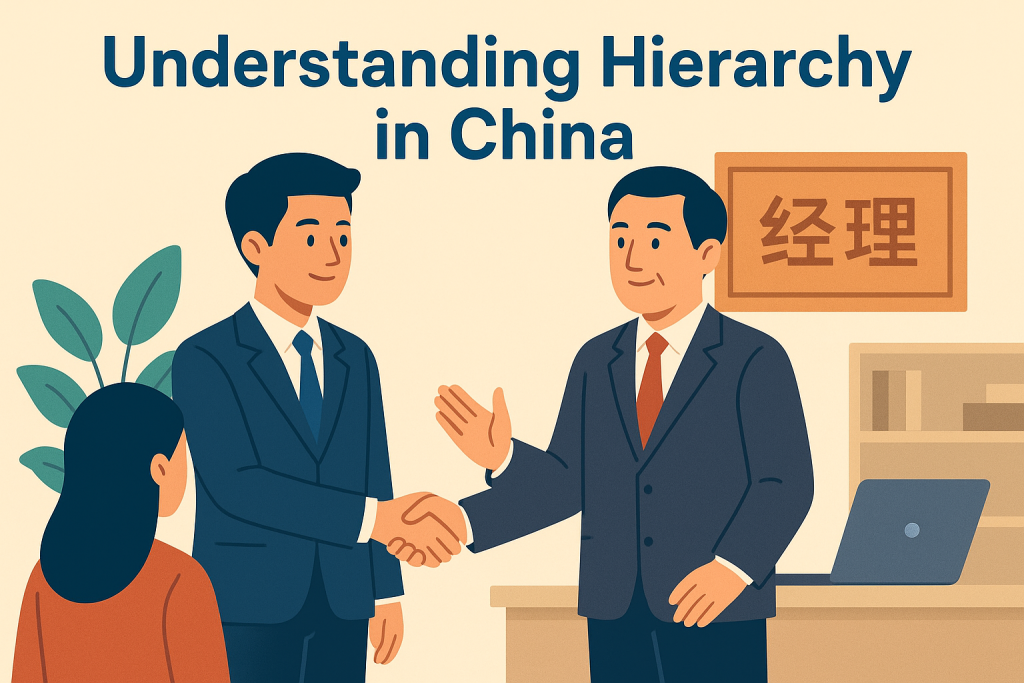
Understanding Hierarchy in China: Why Titles, Roles & Seniority Matter
Intro
If you want to work smoothly with Chinese people—whether in business, education, or daily communication—there is one rule you must understand: hierarchy matters. While Western cultures often value equality and directness, China places strong importance on seniority, roles, positions, and proper greetings. Recognizing and respecting this hierarchy will help you build trust and avoid unnecessary tension.
1. Why Hierarchy Matters in China
Hierarchy in China is less about power and more about social order and respect. It helps groups function smoothly by clarifying:
- who leads
- who decides
- who implements
This mindset has roots in Confucian values emphasizing order, respect for elders, and social harmony.
2. Titles Are More Important Than Names
In China, using titles (Manager Wang, Director Li, Teacher Zhang) is expected and shows respect. While a westerner might say, “Call me Tom,” in many Chinese contexts you should use the title until invited to use first names.
Tip: If unsure, use the more formal title — it’s safer than being too casual.
3. Seniority Affects Decision-Making
Expect that senior leaders speak first, and junior staff defer. Decisions commonly require approval across levels. Bypassing leaders and negotiating only with juniors can cause embarrassment or stall a deal.
4. How to Behave in Meetings
Do:
- Greet the most senior person first
- Offer seats of honor to leaders and elders
- Let senior members speak before commenting
- Be patient — decisions may move slowly through layers
Don’t:
- Interrupt a senior person
- Criticize someone in front of their boss
- Press junior staff to “break hierarchy”
5. Western vs Chinese Hierarchy — Quick Comparison
| Situation | Western Style | Chinese Style |
|---|---|---|
| Decision-making | Decentralized / collaborative | Centralized / senior-driven |
| Addressing people | First name | Title + last name |
| Public disagreement | Common & accepted | May harm relationships |
| Leadership | Flat structures | Clear seniority |
6. How Foreigners Can Show Respect Easily
- Use formal titles until invited to be casual
- Present and receive business cards with two hands
- Let senior people enter or be seated first
- Avoid direct public criticism
- Ask senior members for opinions first in meetings
These small actions create a strong impression of cultural awareness and help build faster trust.
7. Why Understanding Hierarchy Helps You Win in China
Respecting hierarchy reduces misunderstandings, smooths negotiations, and builds long-term partnerships. Once Chinese colleagues think “He understands us,” cooperation becomes much easier.
Conclusion
Hierarchy is not an obstacle — it’s a roadmap. When you respect titles, roles, and seniority, your communication becomes more natural and your relationships in China more durable. Think of hierarchy as a cultural map that helps you navigate conversations, decisions, and respect.