
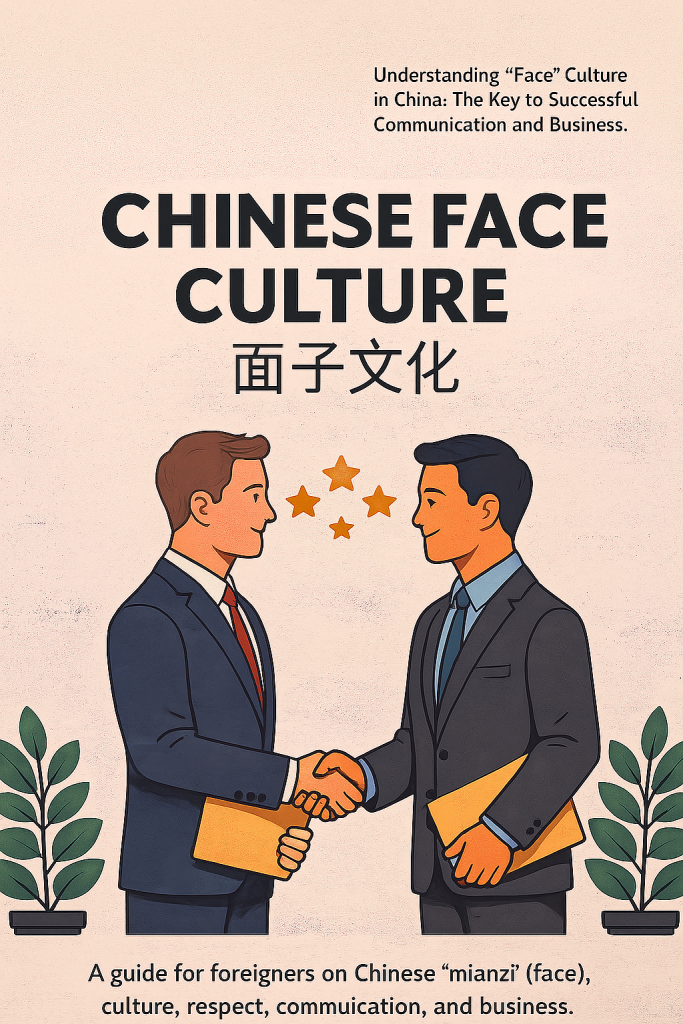
Face (面子) Culture in China: The Hidden Key to Successful Cooperation
If you want to build strong relationships, avoid misunderstandings, and work smoothly with Chinese partners,
you must understand one core concept: Face, or mianzi (面子).
“Face” is the emotional and social currency in Chinese culture — it affects communication, respect, status,
harmony, and business decisions. Mastering it will immediately improve your interactions with Chinese people,
whether in daily life or business.
What Is “Face” (面子)?
“Face” refers to a person’s social image, dignity, and how they are perceived by others.
It is about respect, reputation, and emotional comfort.
There are three layers of “Face”:
- Giving Face (给面子): Showing respect, praising others, supporting their status.
- Saving Face (留面子): Avoiding embarrassment or public criticism.
- Losing Face (丢面子): Feeling ashamed, disrespected, or publicly challenged.
In China, people will often change their tone, decisions, or behavior to protect someone’s face — including their own.
Why “Face” Matters in Business
Face impacts almost every part of cooperation:
- Communication: Chinese people tend to be indirect to avoid causing face loss.
- Negotiation: A deal may fail if someone feels disrespected.
- Team management: Criticizing someone publicly can destroy trust.
- Decision-making: People may say “let me think about it” instead of “no”.
Understanding this makes you more effective, respectful, and trusted.
How to Give Face (给面子)
Giving face builds trust quickly. Here are simple ways to do it:
- Praise their efforts or expertise publicly.
- Show respect to their leader or senior member.
- Let them introduce ideas or take credit for teamwork.
- Show appreciation for invitations, hospitality, and help.
Remember: giving face costs you nothing but brings huge benefits.
How to Help Someone Save Face (留面子)
Foreigners often accidentally cause “face loss” without realizing it.
Here’s how to prevent that:
- Avoid direct “no” — try softer alternatives.
- Do not challenge someone publicly in a meeting.
- Give feedback privately, with a warm tone.
- Avoid sarcastic jokes that may sound offensive.
- Use more “suggestions” instead of “corrections”.
When you let people save face, cooperation becomes smoother and more pleasant.
Common Situations Where Face Matters
1. Meetings
A Chinese colleague may avoid criticizing another team member in public to prevent face loss.
2. Negotiations
If you push too aggressively, the other side may feel pressured and withdraw — not because of the deal,
but because they feel their face was challenged.
3. Daily Communication
A Chinese person might say “maybe”, “let me think”, or “we will see”, instead of directly saying “no”,
to keep the relationship harmonious.
Tips for Foreigners to Adapt Easily
- Be polite and patient — tone matters more than words.
- Listen carefully to indirect messages.
- Avoid overly strong criticism or confrontation.
- Show appreciation and small gestures of respect.
- Protect relationships first, solve problems second.
When you respect face, you gain trust — and trust is everything in Chinese culture.
Final Thoughts
Understanding “Face” is like getting a key that opens doors in China.
It makes communication smoother, reduces misunderstandings, and strengthens partnerships.
Mastering face culture does not mean losing yourself — it means respecting the cultural logic that Chinese people deeply value.
Face is not about ego — it is about harmony, respect, and connection.